Key Takeaways:
Understanding the difference between condensation and damp is vital for applying the right treatment and avoiding long-term damage.
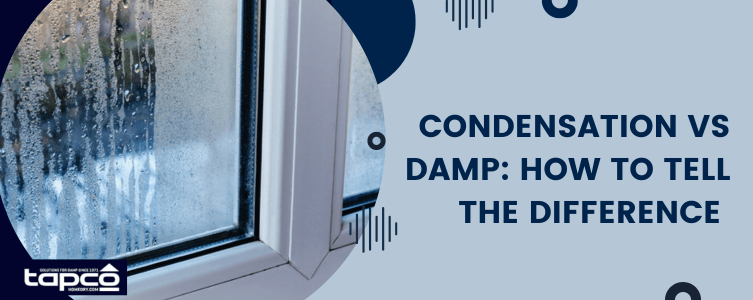
- Condensation occurs when moist indoor air meets a cold surface and releases water droplets.
- Damp usually refers to moisture entering from external sources, such as rising or penetrating damp.
- Condensation often appears as mould or droplets, while damp shows tide marks, patches or peeling finishes.
- Condensation can be managed with better ventilation, but damp may need structural repair or waterproofing.
- Correct diagnosis prevents recurring problems and costly repairs.
As we head into the winter months, you might be bracing from some key changes in your property. Staying ahead of issues like condensation can help you to protect your home from damage due to excess moisture. It will also help to keep your home comfortable and prevent your energy bills from spiraling out of control.
In this guide, we’re looking at the key differences between a condensation issue and dampness, so you can make an informed decision about when you might need to take action. While condensation can be unpleasant, it rarely leads to structural issues in your home. Whereas damp can cause widespread damage to your foundations and timber structures in your home.
Armed with this information, you’ll be able to determine when excess moisture in your home needs to be tackled by a professional, and when you can safely handle this issue with DIY methods.

Are you dealing with condensation or damp?
Both condensation and damp can show up in very similar ways. Some common signs that are linked to both conditions include moisture building up on your windows, doors and cold walls.
You might also notice mould and mildew build up on your walls, flooring, ceiling, furniture and even your possessions. There can be a musty or earthy smell that goes hand in hand with a mould problem. You could also notice things like peeling or soft wallpaper, along with flaking paintwork.
There are some key distinctions that could help you to spot when this is more than just a ventilation issue. Signs that your condensation problem is caused by an underlying damp problem include:
- Rotten, soft or warped floorboards and skirting boards
- A water mark along walls, with a tide mark of salt crystals
- Moisture build up in your basement
- Exterior walls that are buckling due to broken cavity wall ties
- More severe deterioration of materials, including wet plaster and crumbling walls
A condensation problem can certainly contribute to issues with excess moisture in your home, but these are commonly brought under control by improving ventilation and removing moisture from the air with tools like dehumidifiers.
If you find that these issues aren’t helping, it could be worth exploring to see if there is an underlying issue that is contributing to the dampness.

How do you tackle condensation?
To deal with condensation in your home, you need to improve ventilation. It’s possible that you have covered or blocked vents that are designed to help keep the air moving in your home. You should also make sure you use extractor fans when you are cooking or showering, and make sure these vents are regularly cleaned to make them as effective as possible.
Avoiding drying your laundry indoors can also have a huge impact on indoor moisture levels. If this isn’t possible and you have no other option, make sure you use a dehumidifier and keep the space well ventilated. Moisture traps can also be used throughout your home to prevent moisture building up in areas with less air flow.
Heating your home regularly and evenly can also help to prevent cold spots in your home. While it can be tempting to try to live without central heating for as long as possible, this could make a condensation problem worse.
Ventilation vs Structural Repair
Condensation often improves with better ventilation and heating, while rising or penetrating damp needs structural or waterproofing work.
Correct Diagnosis Prevents Recurrence
Identifying the true source ensures lasting results. Professional surveys prevent wasted effort and recurring issues.
How do you tackle damp?
When it comes to damp, you first need to find the source of the moisture and understand the extent of the issue. This requires a professional damp survey to get to the heart of the issue.
Following a damp survey, you will be given recommendations that could include things like basement tanking to prevent moisture from getting into your home through an unfinished basement. You might also need a new damp proof course, or adjustments to the exterior of your property to ensure moisture can drain away effectively.
There aren’t many DIY methods for tackling a damp problem, and while you might be able to keep on top of the symptoms, this won’t address the underlying issue. This is why it’s essential to call in the professionals if you are struggling to get a condensation problem under control. The issue could be linked to a more serious problem in your home, and you’ll need expert help to tackle this. Contact the Tapco HomeDry for advice today.
Highlights
- Condensation = indoor humidity + cold surfaces
- Damp = water ingress or failed protection
- Different symptoms: mould vs tide marks
- Ventilation solves condensation
- Damp often needs professional repair
- Accurate diagnosis is essential
FAQs