Here are answers to the questions we are asked most often. If yours isn’t covered, call us or use our quick quiz to find the right service.
Frequently asked questions
What causes condensation and black mould?
Condensation forms when warm, moisture-laden air meets colder surfaces. The excess moisture can lead to black mould, particularly in kitchens, bathrooms and poorly ventilated rooms. Improving ventilation and reducing indoor humidity are usually key to preventing it.
Can damp cause health problems?
Persistent damp and mould can affect indoor air quality and may aggravate allergies, asthma and other respiratory conditions in some people. Dealing with damp promptly helps create a healthier home and prevents further damage.
How do I know if I have rising damp?
Common signs include tide marks on walls, peeling paint or wallpaper, salt deposits, damp patches near skirting boards and a musty smell. A professional damp survey can confirm whether rising damp is the cause or whether penetrating damp or condensation is responsible.
What is the difference between rising damp and penetrating damp?
Rising damp is moisture travelling up through walls from the ground because of a failed or missing damp proof course. Penetrating damp is caused by defects such as damaged brickwork, blocked or overflowing gutters, cracked render or faulty roofing. Identifying the right cause is essential to choosing the right treatment.
What does dry rot look like?
Timber cracked into cube shapes, white cotton-wool-like growth, grey strands spreading over timber or masonry, a pancake-shaped fruiting body and fine rust-coloured dust. There is often a damp, mushroom-like smell.
Do old woodworm holes mean I need treatment?
Not always. Many period properties have historic flight holes from infestations that died out long ago. We look for fresh bore dust and clean-edged holes to decide whether treatment is needed.
What is basement waterproofing?
Basement waterproofing keeps below-ground spaces dry. Depending on the property, it may involve cavity drain membrane systems, structural waterproofing or tanking. The best system depends on the building's construction and how much water is present.
Do I need a damp survey before buying a property?
If a property shows signs of damp, mould or timber decay, or these are highlighted in a homebuyer's survey, a specialist damp and timber survey is strongly recommended. It identifies the cause and the cost of any repairs before you complete.
Do you offer damp surveys for commercial properties?
Yes. We survey and treat residential and commercial buildings, including offices, retail premises, schools, housing associations, listed buildings and investment properties.
Can I stay in my home during damp proofing work?
In most cases, yes. Many treatments can be completed while you remain in the property. If more extensive work is needed, your surveyor will explain what to expect and whether any rooms need to be vacated temporarily.
How long does a damp survey take?
Most residential damp surveys take between 60 and 90 minutes, depending on the size of the property and the complexity of the issue.
How long does damp proofing last?
Professionally installed damp proofing systems are designed to provide long-term protection when installed correctly and maintained appropriately, and our treatments are backed by written guarantees.
What is an Insurance Backed Guarantee?
An Insurance Backed Guarantee (IBG) protects your guarantee if the company that carried out the work ceases trading. For a single premium, our guarantees can be protected by an IBG.
Are your surveyors paid commission?
No. Our surveyors are not paid commission, so their recommendations are based purely on what your property needs.
What areas do you cover?
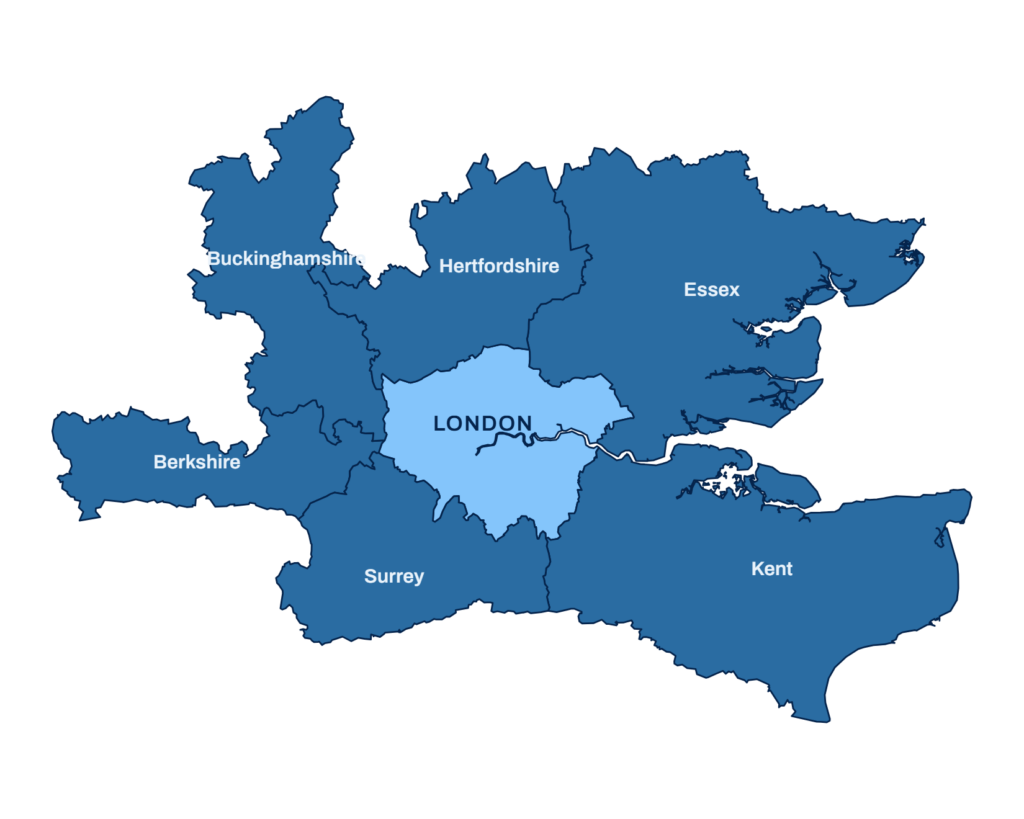
We work throughout London, Surrey and the Home Counties, including Sussex, Kent, Hampshire, Berkshire, Middlesex, Oxfordshire, Hertfordshire and Essex. If you are not sure whether we cover your area, just ask.
How do I arrange a survey?
Call us, email us or use our online request form, and we'll arrange a convenient appointment with one of our surveyors. After the inspection you'll receive professional advice and recommendations tailored to your property.