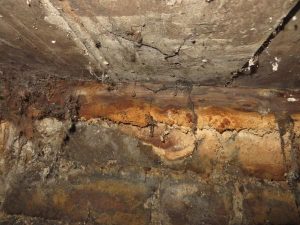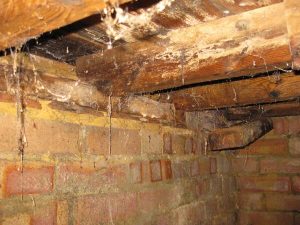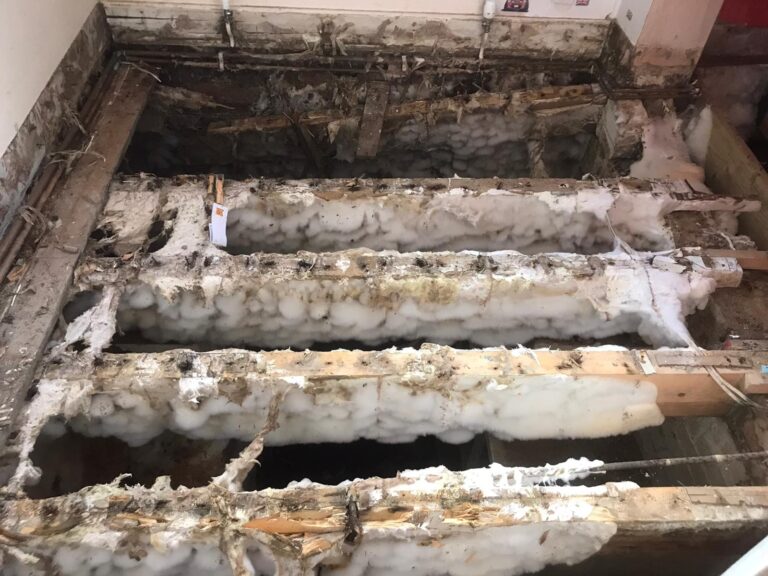
Dry rot is the most destructive form of timber decay found in buildings. Despite its name, it doesn’t start in dry conditions: like all wood-rotting fungi it needs moisture, usually from a leak, failed gutter, damp wall or poorly ventilated sub-floor. Once established, it breaks down the cellulose in timber, causing it to shrink, crack into cubes and lose its strength.
What makes dry rot different is its ability to spread. It sends strands through brickwork, behind plaster and under floors in search of new timber, so an outbreak can be far larger than the visible damage suggests.
Signs of dry rot
- Timber that is dry, brittle and cracked into cube shapes
- White, cotton-wool-like mycelium on timber or masonry
- Silvery-grey strands (hyphae) spreading across surfaces
- A flat, pancake-shaped fruiting body with a rust-coloured centre
- Fine red-brown spore dust
- A damp, mushroomy smell