Dry Rot, Wet Rot & Woodworm Treatment

Timber decay found, treated and repaired, with the moisture source fixed so it doesn't come back.

Book a survey

Experts in Dry Rot & Timber Treatment in London and the Home Counties Since 1971

Just the words “dry rot” worry most property owners, and with good reason. Left untreated, an established outbreak can spread well beyond its source and destroy structural timber.

Wet rot and woodworm are more common, and can be just as damaging over time. Tapco HomeDry has been identifying, treating and repairing timber decay across London and the Home Counties since 1971.

Dry rot (Serpula lacrymans)

Dry rot is the most destructive form of timber decay found in buildings. Despite its name, it doesn’t start in dry conditions: like all wood-rotting fungi it needs moisture, usually from a leak, failed gutter, damp wall or poorly ventilated sub-floor. Once established, it breaks down the cellulose in timber, causing it to shrink, crack into cubes and lose its strength.

What makes dry rot different is its ability to spread. It sends strands through brickwork, behind plaster and under floors in search of new timber, so an outbreak can be far larger than the visible damage suggests.

Signs of dry rot

  • Timber that is dry, brittle and cracked into cube shapes
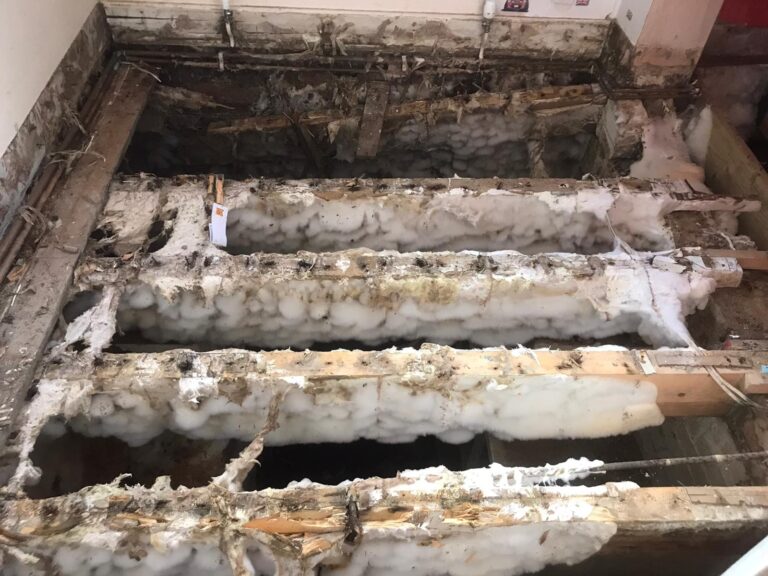
  • White, cotton-wool-like mycelium on timber or masonry
  • Silvery-grey strands (hyphae) spreading across surfaces
  • A flat, pancake-shaped fruiting body with a rust-coloured centre
  • Fine red-brown spore dust
  • A damp, mushroomy smell

Wet rot

Wet rot is a general term for several brown rot and white rot fungi that attack timber kept wet over a long period. It stays where the water is, so it is most often found in window frames, skirting boards, joist ends built into damp walls, sub-floors with blocked air bricks and timbers under leaking roofs or bathrooms. Affected timber goes dark, soft and spongy, or cracks along the grain.

Woodworm

Woodworm is the larval stage of several wood-boring beetles, most commonly the common furniture beetle. The larvae tunnel through timber for several years before emerging as adults, leaving characteristic round flight holes. Serious infestations can weaken floor joists, roof timbers and staircases. Woodworm and wet rot often appear together because damp timber is softer and more attractive to the beetles.

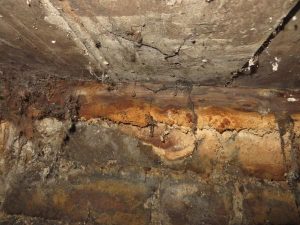
Wet rot damage to a timber wall plate
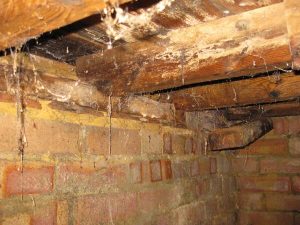
Advanced wood-rotting fungus and heavy woodworm infestation
Left: wet rot in a timber wall plate. Right: advanced fungal decay with a heavy woodworm infestation.

Our timber survey

Every treatment starts with a survey by a PCA-qualified surveyor. We identify which fungus or beetle is present, map how far it has spread, take moisture readings and find the source of the damp. Where needed, and with your permission, we lift floorboards or open up small areas to inspect concealed timber. You receive a written report and a fixed quotation.

How we treat dry rot

  1. Stop the moisture

    Successful treatment begins by finding and fixing the source of moisture: the leak, failed rainwater goods, damp wall or blocked ventilation.

  2. Remove affected timber

    Decayed timber is cut out, including a safety margin beyond the last visible signs of growth, and removed from site.

  3. Treat masonry and retained timber

    Where strands have spread through walls, masonry is treated. Sound timber that can be retained is treated with professional fungicide.

  4. Replace and reinstate

    New, pre-treated timber is installed, and floors, stairs, plasterwork and finishes are reinstated.

How we treat wet rot and woodworm

For wet rot, curing the damp is the main treatment. Once the timber can dry, the fungus dies. We replace or repair timber that has lost its strength, treat surrounding timber as a precaution and improve sub-floor ventilation where needed.

For active woodworm, we apply a targeted insecticidal treatment to affected timbers and replace any that have been structurally weakened. We’ll tell you if the holes are historic and no treatment is needed.

Case study: dry rot in a London home

Dry rot had caused serious damage to the stairway and hallway of a London property, attacking structural timber and leaving it unable to bear load. We first traced and fixed the source of the damp. Retained timber was treated with a professional fungicide, the infestation was eradicated, and damaged structural timber was replaced before the floors, stairs and plaster were reinstated.

We have also restored historic timber at the Chapel in Weybridge, one of many listed and heritage projects completed over five decades.

Preventing timber decay

  • Keep gutters, downpipes and roofs in good repair
  • Keep air bricks clear so sub-floors stay ventilated
  • Fix plumbing leaks quickly and dry out affected areas
  • Avoid raising ground levels or patios above the damp proof course
  • Get suspicious timber checked early, before decay spreads

1971

Established in Thames Ditton

55+

Years of damp & timber expertise

4,000+

Properties visited every year

10

Counties covered across the South East

Why choose Tapco

Dry Rot & Timber Treatment done properly. Diagnosed first, guaranteed after.

Every property gets an individual assessment from a qualified surveyor before anything is recommended.

A little more about us
  1. 01

    Commission-free surveys

    Our PCA-qualified surveyors are not paid commission, so we only recommend the work your building genuinely needs.

  2. 02

    Fixed, written quotations

    After your survey you get a clear written report and a fixed quote, with no hidden extras.

  3. 03

    Our own trained teams

    Our own teams carry out the work, protect your home, keep dust down and leave everything clean.

  4. 04

    Guaranteed for peace of mind

    Written guarantees, which can be protected by an Insurance Backed Guarantee.

Book a survey

Get started today

If you’ve noticed any of these issues, arranging a professional survey is the best way to identify the cause and prevent further damage.

Frequently asked questions

What does dry rot look like?

Look for timber that has shrunk and cracked into cube shapes, white cotton-wool-like growth (mycelium), grey or silvery strands, a flat pancake-like fruiting body and fine rust-coloured spore dust. There is often a damp, mushroomy smell.

Can dry rot spread through walls?

Yes. Dry rot can send strands through masonry and behind plaster to reach new timber, which is why outbreaks can be much larger than they first appear and why masonry is sometimes treated too.

What is the difference between dry rot and wet rot?

Both are fungi that need moisture. Wet rot needs timber to stay wet and remains where the water is. Dry rot can grow in timber with a lower moisture content and spread through masonry. They are treated differently, so identification matters.

Is woodworm always active?

No. Many older properties have historic flight holes from beetles that died out long ago. Fresh, clean-edged holes and bore dust suggest an active infestation. We only recommend treatment where it is needed.

Are timber treatments safe for my family and pets?

We use professional products applied by trained technicians. Your surveyor will explain any precautions, such as keeping treated rooms clear for a short time while the treatment dries.

Is timber treatment guaranteed?

Yes. Our treatments carry a written guarantee, which can be protected by an Insurance Backed Guarantee for a single premium.

Client testimonials

We bought a house that had a basement but was in need of some work. Right from the start we received a professional service. The work was carried out in a timely manner and there were no hidden surprises!

Lucy Willows
More kind words

Find the right service / 1 minute

Not sure what you need?

Tell us what you’re seeing and we’ll point you to the right treatment. Four quick questions.

Serving London, Surrey & the Home Counties

From our offices in Thames Ditton and Esher, our surveyors cover London and the surrounding counties, providing fast response times for residential and commercial properties alike.

We regularly work with:

  • Homeowners
  • Landlords
  • Estate agents
  • Property managers
  • Commercial property owners
  • Housing associations
  • Local authorities

Whether your property requires a damp survey, timber inspection or basement waterproofing system, our experienced team is ready to help.

Map of London and the Home Counties we cover

Our Trusted Accreditations

Our certifications reflect our commitment to the highest standards of work and quality.

Property Care AssociationTrustMarkBasement Waterproofing AssociationSafeContractorCHASAccreditation

Why Tapco

Why choose us

Established in 1971

Choosing Tapco HomeDry means choosing a company with a proven history of protecting properties across the South East.

  • Established in 1971
  • Over 55 years of industry experience
  • Thousands of successful property surveys
  • Honest, practical advice
  • Qualified specialist surveys
  • Comprehensive guarantees
  • Trusted by homeowners and commercial clients

We believe every property deserves an individual assessment. That’s why our recommendations are based on what your building genuinely needs, not unnecessary treatments.

FCA Status Disclosure

Tapco (Preservation) Ltd is an Introducer Appointed Representative (Financial Services Register No. 423558) of Phoenix Financial Consultants Limited (Phoenix). Phoenix is a credit broker, not a lender. Phoenix is authorised and regulated by the Financial Conduct Authority (FRN: 539195), and offers finance from its panel of lenders. All finance subject to status and credit checks.

Finance available on Tapco treatments