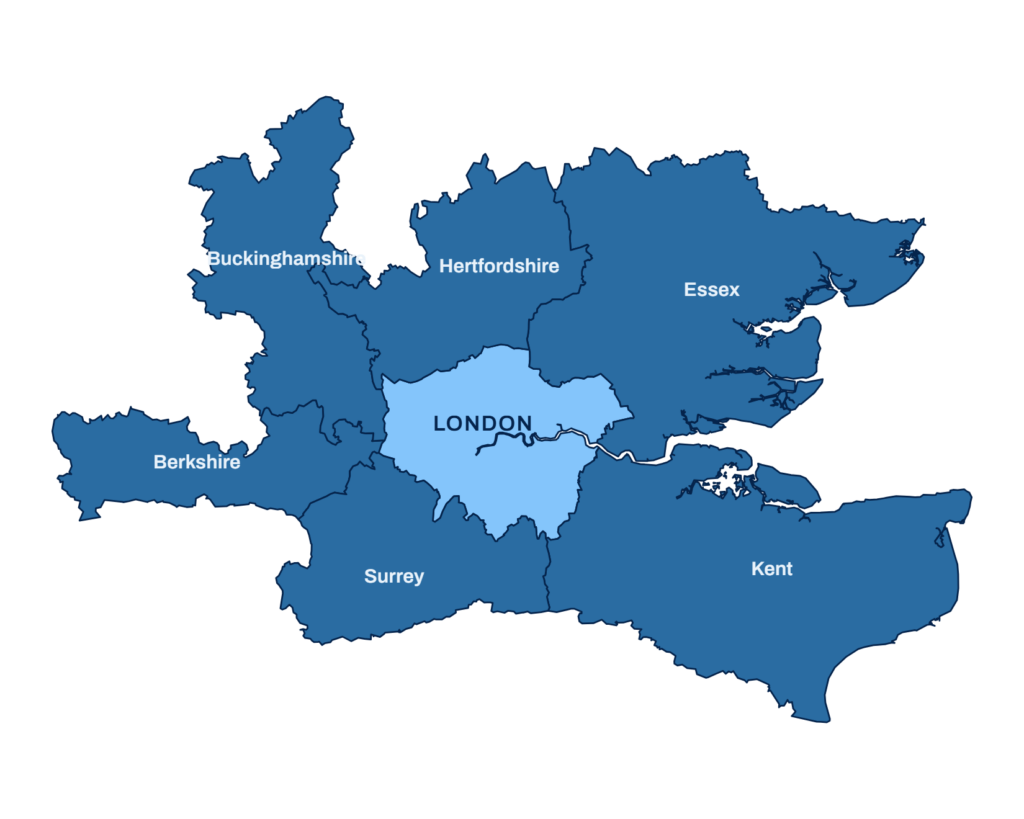
Croydon, Bromley, Beckenham, Purley and much of outer south London were built up rapidly between the wars. These streets of semis and terraces are now around a hundred years old, and two problems often show up together: clay soils that move with the seasons, and cavity wall ties that are corroding.
Clay soils and mature trees
Much of this part of London sits on clay, which shrinks as it dries in summer and swells when it gets wet in winter. Tree-lined streets and large gardens add to this, as roots draw moisture from the soil. The result can be seasonal movement in foundations and cracks that open and close through the year.
Corroding wall ties
Many interwar cavity walls were built with mild steel wall ties. As these rust they expand, which can crack and lift the outer leaf of brickwork. The classic sign is a horizontal crack in the mortar repeating every few courses.
Reading the cracks
- Stepped cracks through brickwork near corners, doors and windows can point to ground movement
- Horizontal cracks at regular intervals suggest wall tie corrosion
- Cracks over openings may mean a failed lintel or arch
- Hairline cracks in plaster are often just shrinkage and not structural
When to get it checked
Cracks wider than about 3mm, cracks that are growing, doors and windows that start sticking, or cracks on both the inside and outside of the same wall are all worth a proper inspection. If subsidence is suspected, contact your buildings insurer.
How it is repaired
Wall tie problems are fixed by installing new stainless steel ties and isolating the old ones. Cracked masonry can be stitched with helical bars bonded into the mortar joints, then repointed to match. Where ground movement is the cause, it needs to be understood and addressed first.
See cracked wall and wall tie repair in London, or read our wall tie replacement guide.