Key Takeaways:
Damp walls are often caused by moisture from various sources and require identifying the root cause before applying suitable treatments to prevent recurrence.
- Moisture sources include leaky pipes, poor ventilation, failed damp proof course, and cracked roof or rendering.
- Signs of damp include musty smells, watermarks, peeling paint or wallpaper, mould patches, and cold walls.
- Treatments vary by cause: damp proof course restoration, basement tanking, ventilation improvements, mould-proof paint, etc.
- DIY fixes may help with minor issues, but professional assessment is often needed for structural or persistent problems.
- Preventative measures (ventilation, fixing leaks) are as important as corrective ones.
Damp is common in properties throughout the UK. The high rainfall and high humidity means that properties are more likely to suffer from dampness. While modern construction methods might work hard to prevent dampness in the home, these methods are known to fail.
When damp proofing methods fail, this can lead to an increase in moisture in the home. When left to build up, this can create the ideal conditions for mould and mildew. Wet rot is also a concern when there is a timber frame present.
In this how to guide, we’ll explore how to fix damp walls and how to prevent damp from returning.

What causes damp?
Damp is simply caused by excess moisture in the home. Moisture can come from lots of places, including:
- Leaking plumbing pipes in the home
- Cracked roof tiles
- Faulty rendering or brickwork
- A failed damp proof course
- Failure in the basement tanking
- Poor ventilation in areas like the bathroom or kitchen
- Poor draining around the property leading to standing water

What does damp look like?
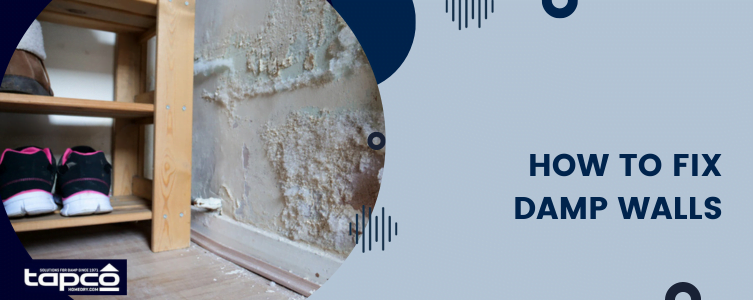
Damp isn’t always easy to spot, particularly if the worst signs are hidden behind large pieces of furniture or under floorboards. The first sign that most people notice is a damp or musty smell. Upon further inspection, you might discover that you have watermarks on your walls, floors and ceiling. There could also be peeling wallpaper or bubbling paintwork.
It’s important to check behind furniture to check for signs of damp. You might notice warped or rotten floorboards and skirting boards. As the damp problem spreads, it could lead to mould patches, which could be black, green or white. Your walls might also be cold to the touch.
If your damp is caused by poor ventilation, the most common signs of damp will typically be moisture on windows and walls. And finally, it will become much more difficult to heat your home and keep it comfortable.
Identify & Address Causes
Fixing damp walls starts with identifying root causes — whether it’s plumbing leaks, failed damp proof courses, or poor ventilation — and addressing them properly to stop moisture from returning.
Long-Term Protection
Using correct treatment methods (e.g. damp proof courses, mould-proof paint, improved ventilation) backed by professional help ensures walls stay dry and healthy, preventing recurring damp and mould issues.

What are the most common treatments for damp?
There are a few different methods to treat damp, and the right one for you will depend on the cause of your damp problem. Here are some of the most common treatments for damp:
Damp proof course: If your home doesn’t have a damp proof course, one can be installed. And if you have one but it has failed, this can be restored. A damp proof course is a chemical barrier that is injected into the brickwork to prevent moisture passing into your home from the outside.
Basement tanking: In the case of underground spaces like a basement or cellar, you’ll need a tanking installation to prevent moisture passing through the walls and floor of your basement from the earth outside.
Fixing leaks and structural issues: If your damp is caused by leaking pipes, cracked roof tiles or faulty rendering, simply fixing this issue will cause the damp problem to go away.

Improve ventilation: When your damp issues are caused by a buildup of moisture due to poor ventilation, addressing this can help the problem to go away. This could mean installing an extraction fan in the bathroom or kitchen of your home. Even something as simple as opening your bedroom windows in the morning can help to remove a lot of moisture from the air.
Dehumidifiers: If your home is prone to excess moisture, using dehumidifiers throughout your home could help to drive out moisture. Remember that this will only address the effects of damp and not the underlying cause. Eventually, you will need to address why you have excess moisture in your home.
Mould proof paint: For areas that are prone to high moisture levels, you can address the higher risk of mould by using a breathable mould proof paint. This specialist paint contains fungicide which helps to stop mould from building up.

Should a professional fix damp walls?
In most cases, you will benefit from the insight and support of a professional to fix your damp walls. A professional can investigate the root cause of your problem to help identify why your walls are damp. A professional can also advise on the presence of structural damage that may have been caused by your damp problem.
For resolving a damp problem with methods like a damp proof course or basement tanking, you will always need to consult a professional. Not only are these methods complex and very messy, there is also a high risk of error. When it comes to damp proofing measures, you want to be confident that it has been installed correctly.
If your dampness is simply caused by poor ventilation, you might be able to address this yourself. However, methods like installing extraction fans should typically be left to the professionals. If you already have an extraction fan and it isn’t working correctly, simply cleaning it could help to address the issue.
Highlights
- Causes of damp walls
- Visual signs of moisture & mould
- Damp proof course repair or installation
- Importance of ventilation
- When to call a professional
- Mould-proof paint as protective measure
FAQs
How do I know what is causing the damp in my walls?
You’ll need to inspect for visible signs like leaks, failed damp proof course, or faulty rendering. Also check for poor ventilation, plumbing issues, and damp patches. Often a professional assessment helps to pinpoint the exact source.
Can I treat mould and mould damage on my own?
Minor mould can sometimes be treated yourself using mould-proof paint and dehumidifiers. But if mould has spread extensively, or if there is structural damage, professional intervention is recommended.
When should I call a specialist for damp wall repair?
If damp persists after addressing obvious causes, or if there is evidence of structural damage, continuously rising damp, or failure of damp proof measures, a specialist should be consulted.