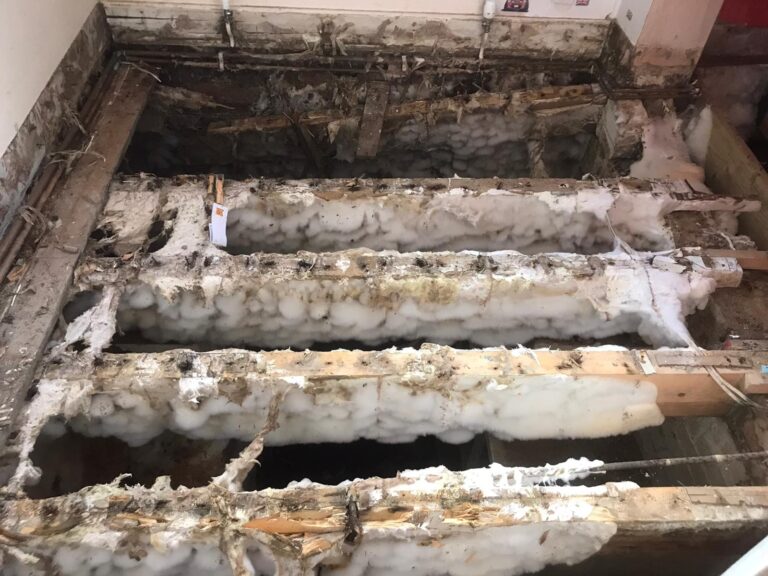
Dry rot (Serpula lacrymans) is the most serious form of timber decay because it can spread through masonry to reach new timber. Treatment starts by finding and stopping the source of moisture. Affected timber is then cut out well beyond the last visible signs of decay, surrounding masonry is sterilised where needed, and retained timber is treated with professional fungicide before new, pre-treated timber is fitted.
Wet rot is more common and stays where the timber is wet. Once the leak, damp wall or poor ventilation is fixed, decayed timber is replaced or repaired and sound timber is treated. We often find wet rot in window frames, skirting boards, joist ends and sub-floors with blocked air bricks.
Woodworm treatment begins with confirming whether an infestation is active. Old flight holes are common in period properties and don't always need treatment. Where beetles are active, we apply a targeted insecticide treatment to the affected timbers and advise on any structural repairs.